



SSTR2
SSTR2 (somatostatin receptor 2) is a G protein-coupled receptor that mediates the biological actions of somatostatin and functions as a major regulator of hormone secretion, neuroendocrine signaling, and cellular homeostasis[1][2]. Mechanistically, SSTR2 couples to inhibitory signaling pathways and exhibits subtype-specific signal transduction properties, including regulation of ERK-dependent pathways and other downstream effectors involved in cellular responses[2][3][4]. Through these signaling networks, SSTR2 can suppress cell proliferation and influence endocrine feedback circuits, supporting its central role in neuroendocrine physiology[3][5]. Disease relevance is particularly evident in pituitary adenomas and gastroenteropancreatic neuroendocrine tumors, where SSTR2 is frequently expressed and serves as an important molecular target for diagnosis and therapeutic intervention[5][6][7]. Experimental studies further demonstrate that loss of SSTR2 alters glucagon regulation, growth hormone feedback mechanisms, and multiple physiological processes in knockout models, highlighting its functional significance in vivo[5]. Compared with related somatostatin receptor isoforms, SSTR2 possesses distinct signaling characteristics and tissue distribution patterns, while alternative splice variants SSTR2A and SSTR2B show only minimal differences in receptor operational properties[2][8]. For experimental and translational applications, SSTR2-selective agonists and clinically used somatostatin analogs, including octreotide-based approaches, have enabled receptor-targeted imaging, radionuclide therapy, and hormone-suppressive strategies in SSTR2-positive tumors[5][6][7].
References:
- [1]. Heo Y, et al. Cryo-EM structure of the human somatostatin receptor 2 complex with its agonist somatostatin delineates the ligand-binding specificity. eLife. 2022;11:e76823.
- [2]. Hou C, et al. Subtype-specific signaling mechanisms of somatostatin receptors SSTR1 and SSTR2. J Biol Chem. 1994 Apr 8;269(14):10357-62. [Content Brief]
- [3]. Lahlou H, et al. sst2 Somatostatin receptor inhibits cell proliferation through Ras-, Rap1-, and B-Raf-dependent ERK2 activation. J Biol Chem. 2003 Oct 10;278(41):39356-71. [Content Brief]
- [4]. Lahlou H, et al. Molecular signaling of somatostatin receptors. Ann N Y Acad Sci. 2004 Apr;1014:121-31. [Content Brief]
- [5]. Database: Guide to pharmacology.
- [6]. Maecke HR, et al. Somatostatin receptors as targets for nuclear medicine imaging and radionuclide treatment. J Nucl Med. 2011 Jun;52(6):841-4. [Content Brief]
- [7]. Plöckinger U, et al. Selective loss of somatostatin receptor 2 in octreotide-resistant growth hormone-secreting adenomas. J Clin Endocrinol Metab. 2008 Apr;93(4):1203-10. [Content Brief]
- [8]. Patel YC, et al. Multiple gene transcripts of the somatostatin receptor SSTR2: tissue selective distribution and cAMP regulation. Biochem Biophys Res Commun. 1993 Apr 15;192(1):288-94. [Content Brief]
-
SSTR2 Related Products (29)
Related Products (29)

- 1
- 2
-
Octreotide
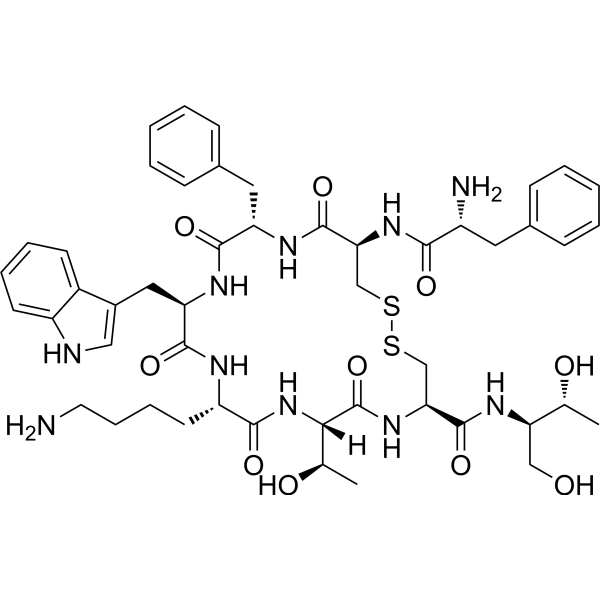 0 ImagesSynonyms: SMS 201-995Octreotide (SMS 201-995) is a somatostatin receptor agonist and synthetic octapeptide endogenous somatostatin analogue. Octreotide (SMS 201-995) can bind to the somatostatin receptor and mainly subtypes 2, 3, and 5, increases Gi activity, and reduces intracellular cAMP production. Octreotide (SMS 201-995) has antitumor activity, mediates apoptosis and may also be used in disease studies in acromegaly.
-
Cortistatin-14
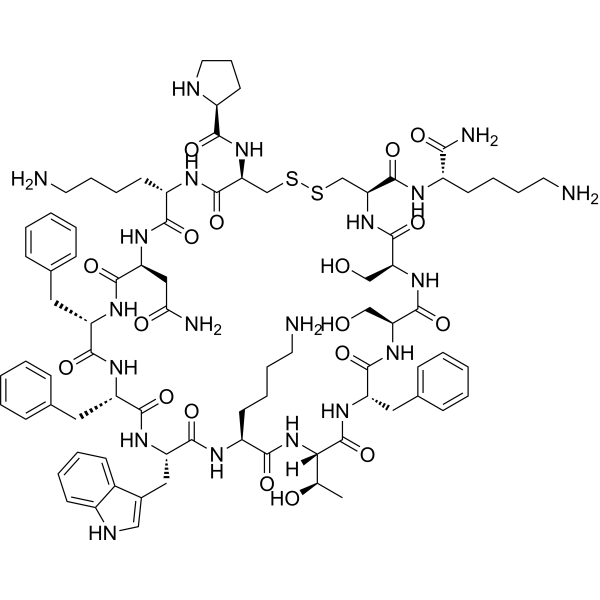 0 ImagesCortistatin-14 is a neuropeptide that shares structural similarities with somatostatin, working by binding to somatostatin receptors (sst1-sst5). Cortistatin-14 (TFA) has anticonvulsant, neuroprotective effects, and significant anti-inflammatory properties.
-
CYN 154806
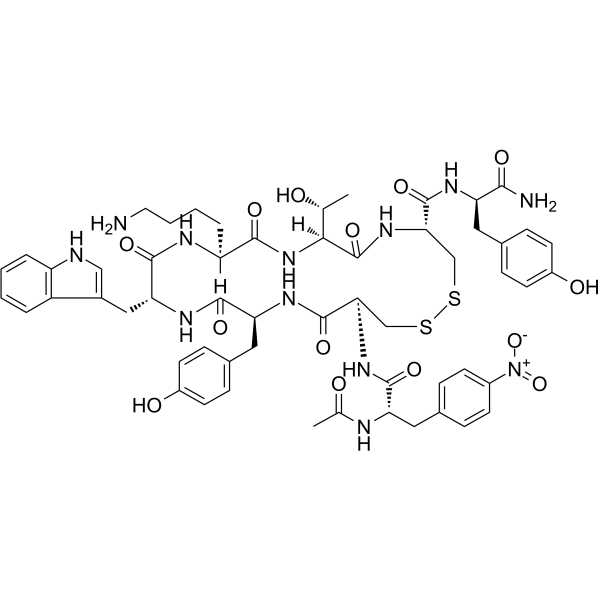 0 ImagesCYN 154806, a cyclic octapeptide, is a potent and selective somatostatin sst2 receptor antagonist, with pIC50 values of 8.58, 5.41, 6.07, 5.76 and 6.48 for human recombinant sst2, sst1, sst3, sst4 and sst5 receptors respectively.
-
Satoreotide
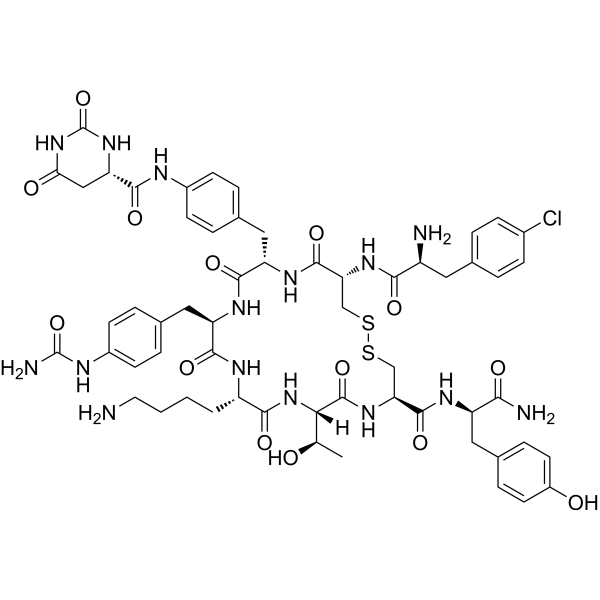 0 ImagesSynonyms: JR11Satoreotide (JR11) is a somatostatin receptor subtype 2 (sstr2)-selective antagonist. Satoreotide can be used as a PET imaging agent when labeled with 68Ga. Satoreotide can be used for cancer research.
-
NODAGA-LM3
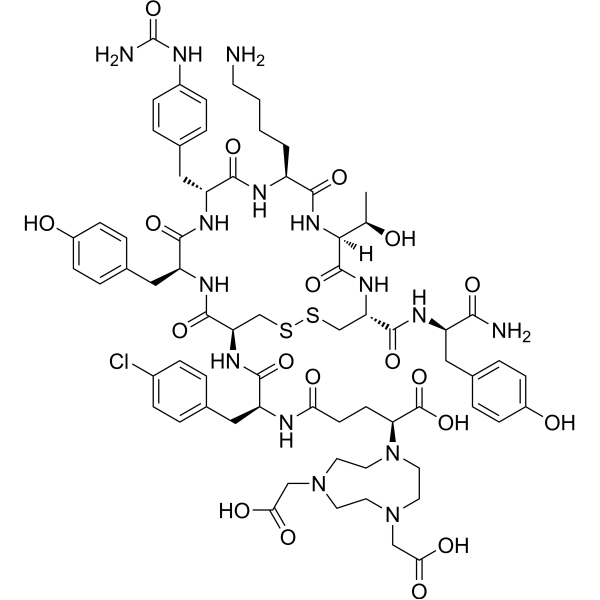 0 ImagesCat. No.: HY-P5362Purity: 99.65%NODAGA-LM3 is a ligand that can cross the blood-brain barrier and targets somatostatin receptor SSTR2 with high affinity (IC50 = 1.3 nM). NODAGA-LM3 does not trigger the internalization of SSTR2 and can inhibit agonist-induced internalization processes. NODAGA-LM3 shows low uptake in normal tissues such as the liver and spleen, but high uptake in the lungs and blood pool. 68Ga-labeled NODAGA-LM3 can serve as a PET imaging agent for well-differentiated neuroendocrine tumors, and is applied in studies related to small cell lung cancer and well-differentiated neuroendocrine tumors.
-
TATE-DA-I
 0 ImagesCat. No.: HY-P11924TATE-DA-I is a somatostatin receptor 2 (SSTR2) ligand with an IC50 of 25.3 nM. TATE-DA-I binds to albumin to prolong its circulation retention time and also exhibits enhanced tumor accumulation capacity. TATE-DA-I enables clear visualization of SSTR2-positive tumors in SPECT/CT imaging. TATE-DA-I can be used in cancer-related research.
-
Ac-crown-TATE
 0 ImagesCat. No.: HY-P11900Ac-crown-TATE is an actinium-labeled radioligand derived from the SSTR2 agonist crown-TATE, which targets neuroendocrine tumors with high SSTR2 expression. The [226Ac]Ac-crown-TATE form of Ac-crown-TATE possesses both SPECT-detectable γ-emission and α-radiation properties, and it inhibits tumor growth and prolongs survival. Ac-crown-TATE can be used in studies of SSTR2-positive neuroendocrine tumors, targeted α-radiation, and radionuclide imaging.
-
CYN 154806 TFA
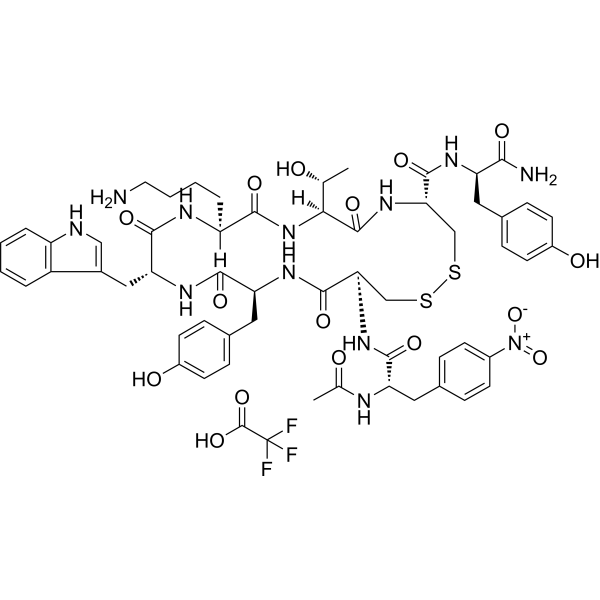 0 ImagesCYN 154806 TFA, a cyclic octapeptide, is a potent and selective somatostatin sst2 receptor antagonist, with pIC50 values of 8.58, 5.41, 6.07, 5.76 and 6.48 for human recombinant sst2, sst1, sst3, sst4 and sst5 receptors respectively.
-
Veldoreotide TFA
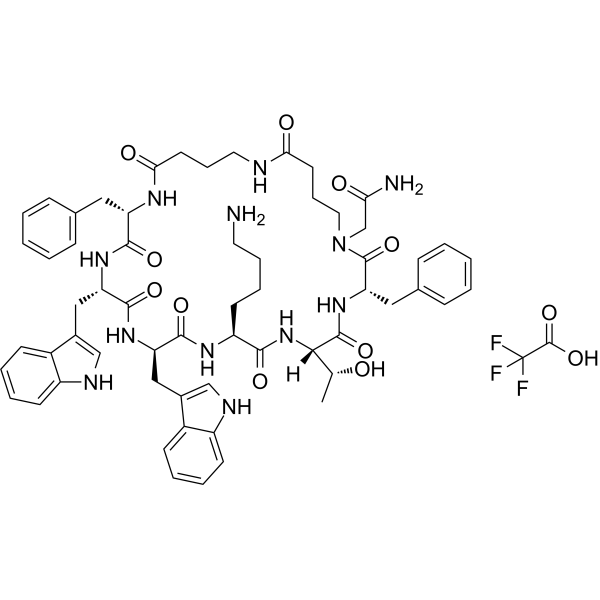 0 ImagesSynonyms: DG3173 TFA; PTR-3173 TFAVeldoreotide (DG3173) TFA a somatostatin analogue, binds to and activate the somatostatin receptors (SSTR) 2, 4, and 5. Veldoreotide TFA inhibits growth hormone (GH) secretion in adenomas compared with Octreotide (HY-P0036). Veldoreotide has the potential to be used as pain modulating agent
-
PRL 2915
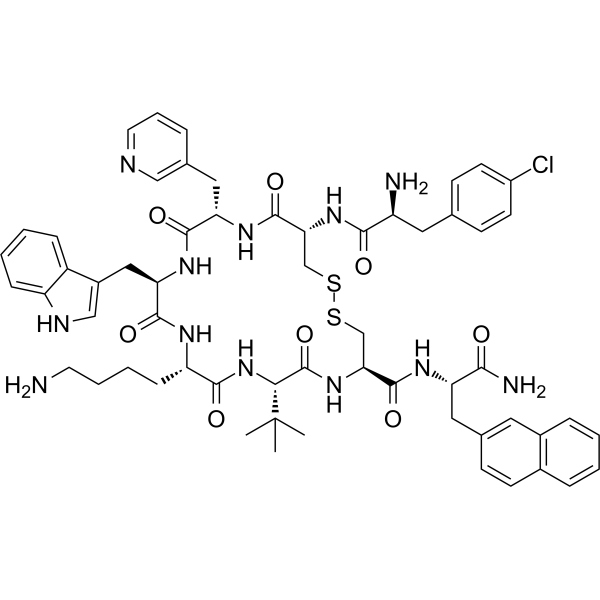 0 ImagesPRL 2915 is a potent human somatostatin subtype 2 receptor (hsst2) antagonist with a Ki of 12 nM.
-
Angiopeptin TFA
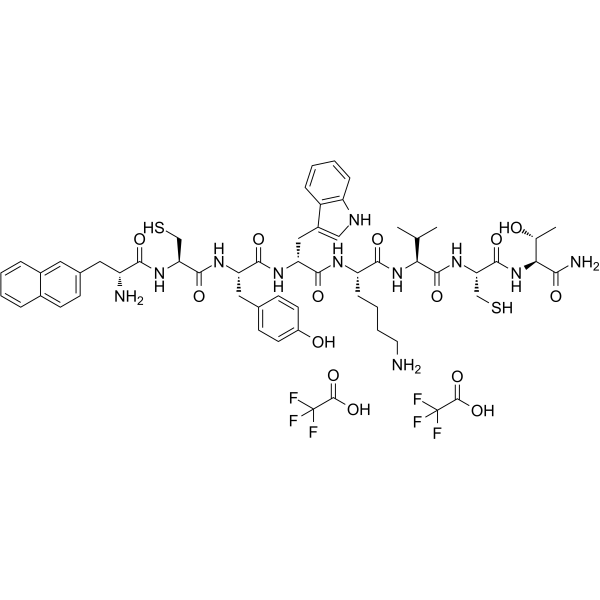 0 ImagesAngiopeptin TFA, a cyclic octapeptide analogue of somatostatin, is a weak sst2/sst5 receptor partial agonist with IC50 values of 0.26 nM and 6.92 nM, respectively. Angiopeptin TFA is a potent inhibitor of growth hormone release and insulin-like growth factor-1 (IGF-1) production. Angiopeptin TFA inhibits adenylate cyclase or stimulates extracellular acidification. Angiopeptin TFA has the potential for coronary atherosclerosis research.
-
Veldoreotide
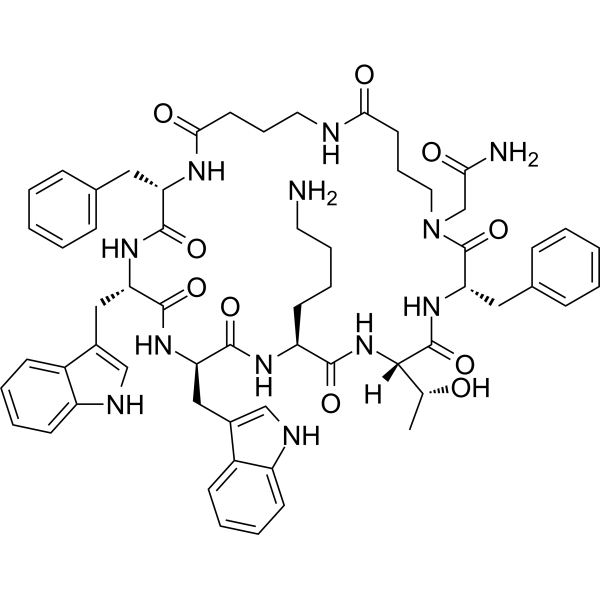 0 ImagesCat. No.: HY-P0024CAS No.: 252845-37-7Synonyms: DG3173; PTR-3173
-
Cortistatin-29 (reduced)
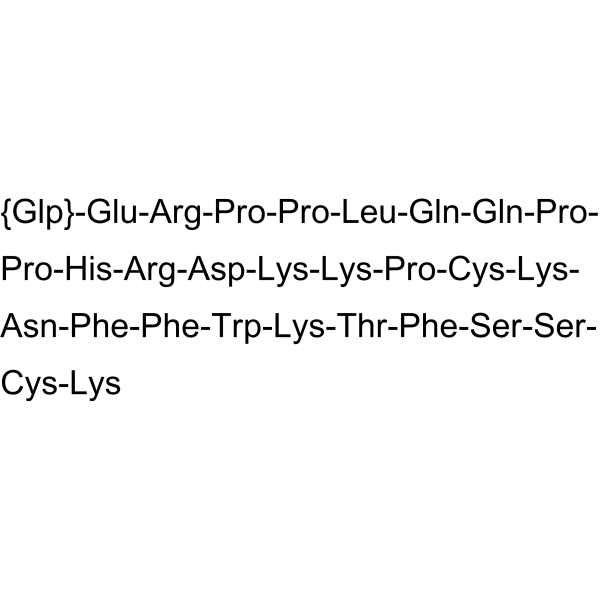 0 ImagesCat. No.: HY-P3618Purity: 98.12%Cortistatin-29 is a neuropeptide. Cortistatin-29 alleviates neuropathic pain. Cortistatin-29 binds all somatostatin (SS) receptor subtypes with high affinity and shows IC50 values of 2.8 nM, 7.1 nM, 0.2 nM, 3.0 nM, 13.7 nM for SSTR1, SSTR2, SSTR3, SSTR4, SSTR5, respectively. Cortistatin-29 shows anti-fibrotic effects.
-
Seglitide
 0 ImagesSynonyms: MK-678; L-363586Seglitide (MK-678) is an orally active, selective SSTR2 agonist and somatostatin analog. Seglitide also acts as a competitive Somatostatin receptor antagonist, with pA2 values of 6.50, 6.24 and 6.09 against SS14, SS25 and SS28, respectively. Seglitide produces only weak, transient inhibition of myocardial contractility in isolated right atria of guinea pigs. Seglitide inhibits glucagon secretion and reduces circulating insulin levels. Seglitide causes a sustained, reversible reduction in elevated systolic blood pressure in streptozotocin (HY-13753)-induced diabetic rats, but exerts no effect on spontaneously hypertensive rats. Seglitide induces membrane hyperpolarization and inhibits electrical excitability. Seglitide induces concentration-dependent contraction and significant desensitization in isolated distal colon of rats. Seglitide can be used in research related to hypertension complicated with insulin-dependent diabetes mellitus.
-
NODAGA-LM3 TFA
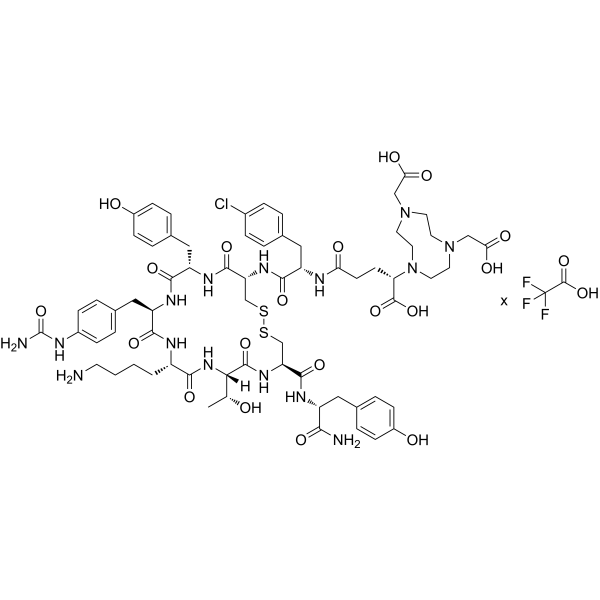 0 ImagesCat. No.: HY-P5362ANODAGA-LM3 TFA is a ligand that can cross the blood-brain barrier and targets somatostatin receptor SSTR2 with high affinity (IC50 = 1.3 nM). NODAGA-LM3 TFA does not trigger the internalization of SSTR2 and can inhibit agonist-induced internalization processes. NODAGA-LM3 TFA shows low uptake in normal tissues such as the liver and spleen, but high uptake in the lungs and blood pool. 68Ga-labeled NODAGA-LM3 TFA can serve as a PET imaging agent for well-differentiated neuroendocrine tumors, and is applied in studies related to small cell lung cancer and well-differentiated neuroendocrine tumors.
-
PRL 3195
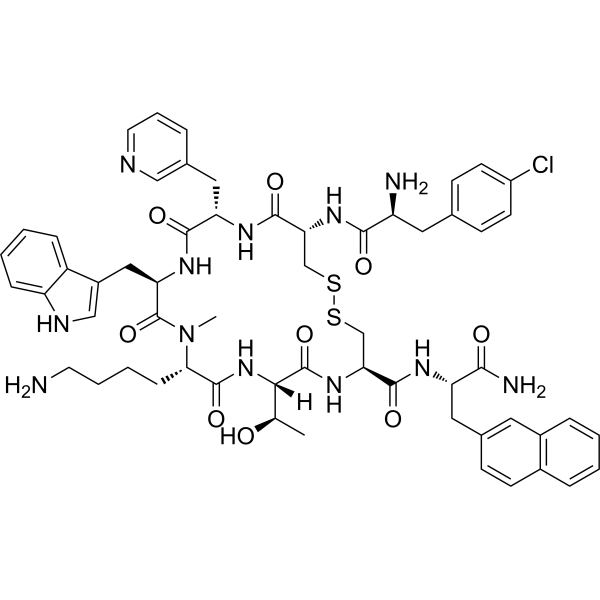 0 ImagesCat. No.: HY-P4469CAS No.: 341519-04-8PRL 3195 is a somatostatin receptor antagonist with Kis of 6, 17, 66, 1000 and 1000 nM for human somatostatin receptors (sst5, sst2, sst3, sst1 and sst4, respectively).
-
Tyr3-Octreotate
 0 ImagesTyr3-Octreotate is a ligand for somatostatin receptor subtype 2 (sst2), with an IC50 value of 1.3 nM against sst2 when labeled with [111In-DTPA], and an IC50 value of 1.6 nM against sst2 when labeled with [90Y-DOTA]. Radiolabeled Tyr3-Octreotate generates cell-associated radioactivity, and acts as both a tumor growth inhibitor and a tumor cytotoxic agent. When radiolabeled with 177Lu or 90Y, Tyr3-Octreotate serves as a peptide receptor radionuclide therapy (PRRT) analog. Tyr3-Octreotate can be used in studies related to pancreatic tumors.
-
[Tyr1]-Somatostatin-14
![[Tyr1]-Somatostatin-14](https://file.medchemexpress.com/product_pic/hy-p2545.gif "Click to View [Tyr1]-Somatostatin-14 Product Detail") 0 ImagesCat. No.: HY-P2545CAS No.: 59481-23-1[Tyr1]-Somatostatin-14 could binds to SSTR2.
0 ImagesCat. No.: HY-P2545CAS No.: 59481-23-1[Tyr1]-Somatostatin-14 could binds to SSTR2.
-
BIM-23197
 0 ImagesCat. No.: HY-P0042CAS No.: 168016-90-8BIM-23197 is a selective SST2 (IC50 = 0.19 nM) agonist. BIM-23197 can effectively stimulate intracellular calcium mobilization in cells expressing SST2. BIM-23197 can be used for research on endocrine related conditions.
- 1
- 2



